Early access Austin, Texas

Concerned about your heart health? We’ll take it from here.

At-home blood testing and ECG, a photon-counting CCTA scan in Austin, and expert cardiologist guidance. All coordinated for you.

Free waitlist · Step 1 of 8

What brings you here?

Free to join. No payment or commitment.

How it works

Three steps, all coordinated for you.

Step 01

Blood testing and ECG, made easy.

We arrange a blood draw and an ECG at your home or an address of your choice. A clinician reviews the results to determine whether you’re eligible for a scan.

Need a blood test?

Have your blood collected at home by a mobile phlebotomist. Or if you already have results, share them for clinical review.

Need an ECG?

We also schedule an ECG at your home. It records your heart’s electrical activity and helps your clinician assess scan eligibility.
Step 02

Access next-generation heart imaging.

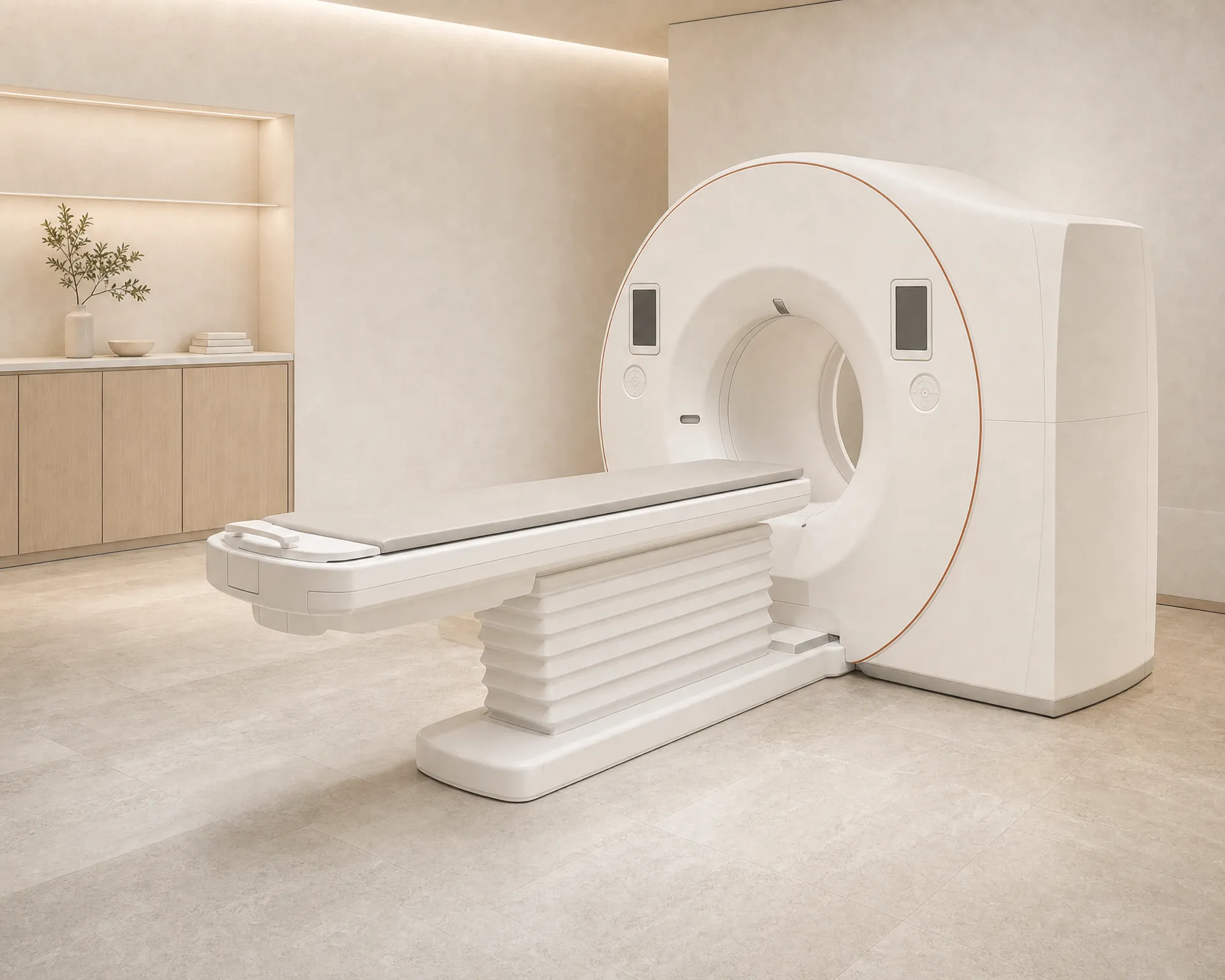
Your scan uses photon-counting CCTA to take a detailed look inside the arteries supplying your heart.

  • Look for soft and hardened plaque

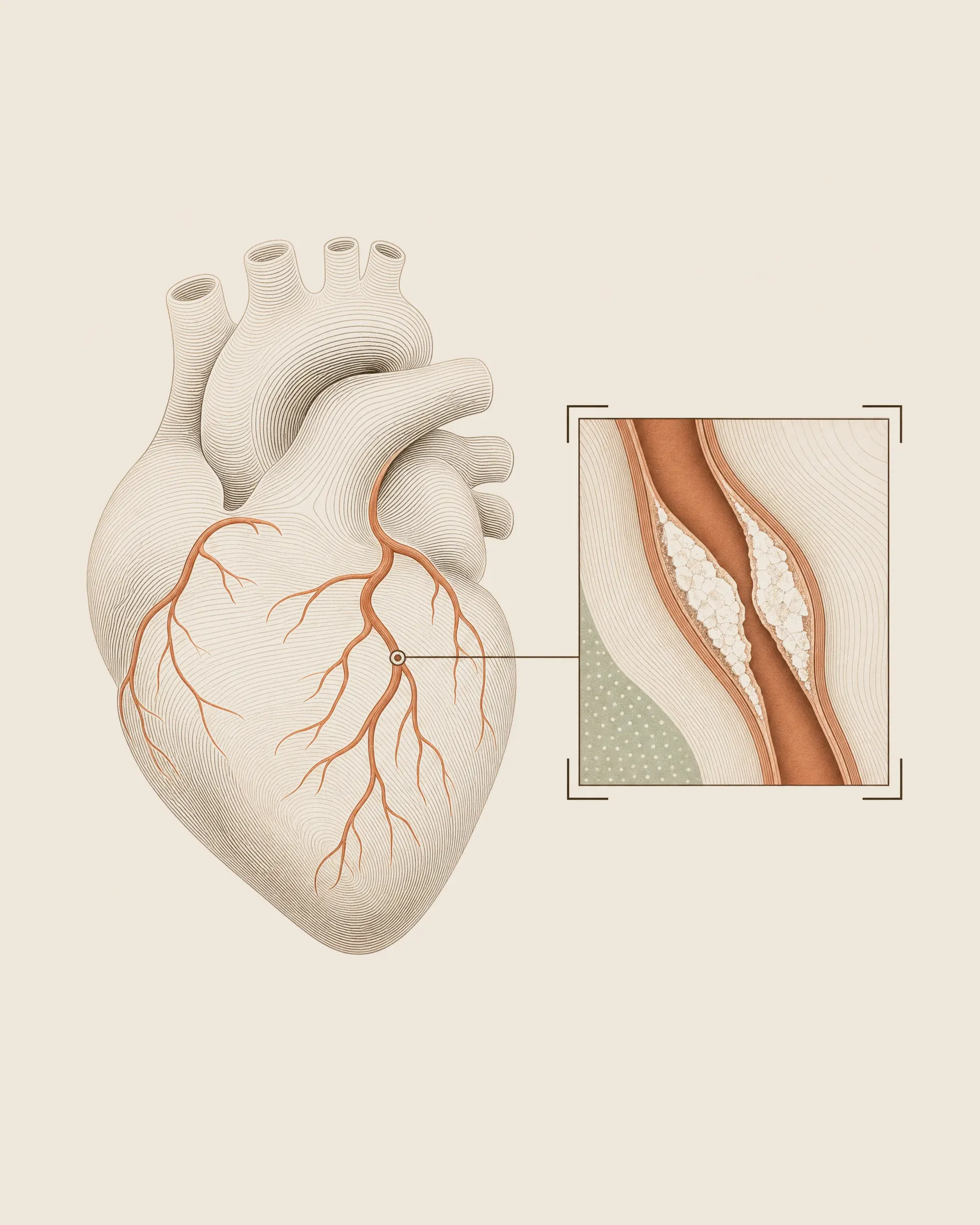
    CCTA checks for both types of buildup in your arteries, as well as any narrowing they may cause.

  • Finer detail than conventional CT

    Photon-counting technology can produce sharper images—even in areas where calcium deposits can make arteries harder to assess.

  • Understand what to do next

    Your cardiologist combines these findings with your blood results and history to explain your risk and recommend next steps.

Explore how the technology works, from Mayo Clinic
A photon-counting CT scanner in a calm, warm-toned imaging suite
Your scan takes place at an independent imaging facility in Austin.

The scan uses X-rays and injected contrast. Clinical review checks whether it’s right for you.

Step 03

A board-certified cardiologist. Answers for you.

Your specialist video consultation

Talk through your blood results and scan with a heart specialist who explains what they mean for you.

  • Your results explained in plain language
  • Time to ask your questions
  • A plan for what comes next
What your cardiologist reviews
  1. Your blood results
  2. Your heart scan and radiology report
  3. Your medical history
  4. Your video consultation

    One conversation that brings it all together.

The Picardo Heart package

Your heart review. All together.

$ 926
Early access · Austin, Texas

No payment today. A clinician reviews your medical history before booking.

What’s included
  • At-home blood test

    A mobile phlebotomist comes to your home or an address of your choice to collect your blood sample.

  • At-home ECG test

    Scheduled at your home, this quick, painless, and noninvasive test records your heart’s electrical activity and helps a clinician determine scan eligibility.

  • Next-generation heart scan

    One photon-counting CCTA scan in Austin.

  • Radiology report

    Your scan findings, in writing.

  • Cardiologist consultation

    One video appointment with a board-certified cardiologist.

The scanner

Most CT scanners use detection technology from the 1970s. Photon-counting CT arrived in Austin in 2026.

Photon-counting CT counts every X-ray individually instead of averaging them, capturing detail conventional scanners can’t. It’s one of the rarest machines in medicine, and your scan is on one.

  1. 1971
    The first CT scan of a patient
  2. 2014
    Mayo Clinic installs the first photon-counting CT for human imaging
  3. 2021
    The FDA clears the first photon-counting CT for clinical use
  4. 2026
    Photon-counting CT opens in Austin, Texas
The evidence & expert perspectives

What the research and experts say.

Diagram of a heart drawn in fine contour lines with its coronary arteries in terracotta; a scan window magnifies one artery narrowed by hard, calcified plaque
10 years

of follow-up, with fewer heart attacks still seen a decade later

SCOT-HEART, The Lancet, 2025
2M+

patients scanned on photon-counting CT worldwide since 2021

Siemens Healthineers, 2025
Class I · Level A

the strongest rating in the U.S. chest pain guideline

The trials above studied people with chest pain. They did not test Picardo’s program or establish the same benefit for screening people without symptoms. A clinician reviews whether imaging is right for you. Sources

“I almost always prefer my patients to have a CT angiogram over a calcium scan.”
Peter Attia, MD
Physician, host of The Drive
Author of Outlive
Source
“This will be a game changer for coronary artery imaging.”
Cynthia McCollough, PhD
Director, CT Clinical Innovation Center
Mayo Clinic
Source
A calcium score “cannot rule out obstructive coronary artery disease, non-obstructive plaque, or adverse plaque phenotypes.”
SCOT-HEART investigators
Analysis of 1,769 patients, 2022
University of Edinburgh
Source

Published views on CCTA and photon-counting CT. These are not endorsements of Picardo.

Common questions

Good to know. Before you begin.

How do I know if I’m eligible?
A clinician reviews your medical history and blood results to assess whether imaging is appropriate. Joining the early-access list doesn’t guarantee a scan.
Where do I get my scan?
Scans take place in Austin, Texas. You’ll need to attend in person; your cardiologist consultation happens by video.
Why does soft plaque matter?
Soft plaque is noncalcified buildup in an artery wall. Some plaques can rupture and trigger a clot that causes a heart attack, even before they cause severe narrowing. CCTA can show noncalcified plaque that a calcium score does not detect, helping a clinician assess the findings alongside your other risk factors. Finding soft plaque does not mean a heart attack is inevitable. Source
How much radiation is involved?
It varies considerably from person to person, so we can’t promise a specific figure. In a 2026 study, standard-resolution photon-counting coronary CT angiography had a median effective dose of about 2.6 mSv. Ultra-high-resolution scans, which capture finer detail, were higher, at about 8.3 mSv. Your own dose depends on the scan protocol, the image resolution, and factors like your body size and heart rate. Sources
How is this different from a calcium score?
A calcium score only detects plaque that has already hardened. CCTA also shows soft plaque and any narrowing it causes—so a zero calcium score isn’t always the whole story.
What happens after I join?
You’ll receive early-access updates. When appointments become available, you’ll be invited to share your medical history for clinical review. There’s no payment to join.
Early access · Austin, Texas

Get a clearer picture of your heart health.

Join the early-access list for updates on Austin appointments and how to book.

No payment today. Clinical review before booking.